
French Fry Line Layout and Utility Planning Guide
A fry line is a chain of wet, hot and frozen process zones that all run at one throughput. The layout decides how easy the line is to clean, maintain and expand. This guide walks through the planning steps Bigtem engineers use, from the process flow to service clearances.
Bigtem USA engineering guide · updated October 2026
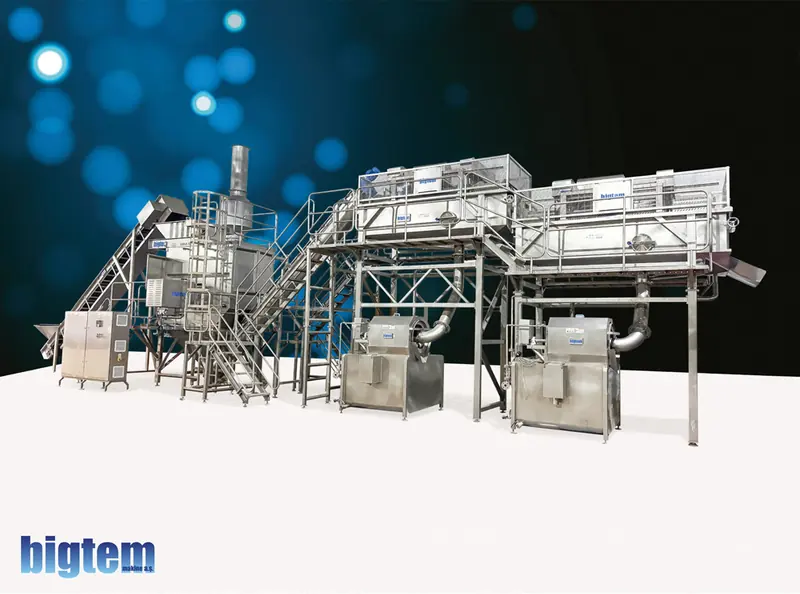
- Fix one design basis (throughput, products, hours) and size every module to it.
- Separate wet, hot, cold and dry zones, and plan utilities before the layout is frozen.
- Design buffers, service access and expansion space in from the start.
Seven planning steps
- Fix the design basis. Agree the target throughput at the fryer outfeed, the product mix (straight cut, crinkle, wedges), operating days and hours, and the raw potato supply. Every module is sized to this one basis.
- Draw the process flow. List the machine sequence: receiving and even feeding, destoning and washing, steam peeling and finishing, inspection, water-knife cutting and sliver removal, blanching, dewatering and drying, frying, cooling, freezing in an IQF freezer integrated from a partner manufacturer, then weighing and packing.
- Separate the zones. Keep wet raw-product areas (receiving to cutting) apart from hot and oily areas (frying) and from the frozen and packing area. Straight, L and U flows all work; the building shape usually decides.
- Plan utilities before freezing the layout. Steam header, water supply and re-use, drainage and slopes, compressed air, power distribution, fryer exhaust, and steam peeler exhaust and condensate routes. Moving equipment is cheap on paper and expensive after the piping goes in.
- Add buffers where stops hurt. Short buffers ahead of the cutter, the fryer and the freezer infeed let one machine stop briefly without stopping the whole line.
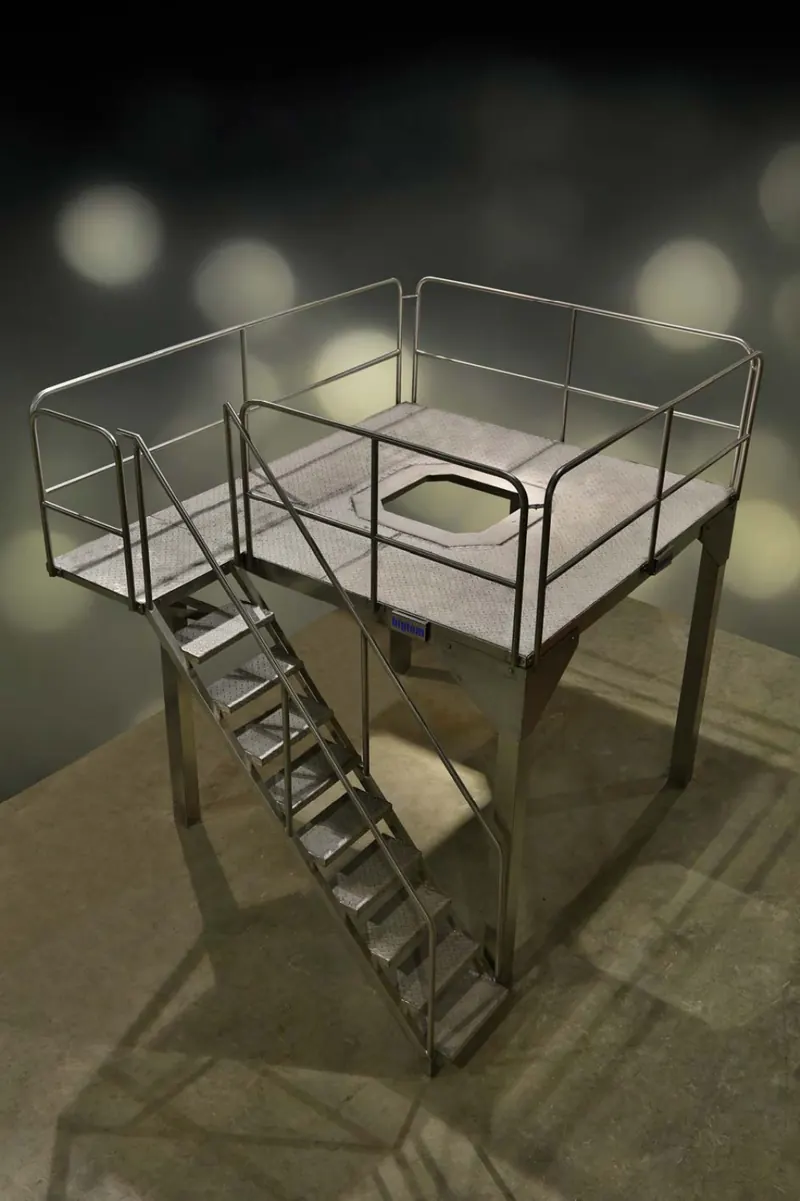
- Design for cleaning and maintenance. Leave access around pumps, filters, drives and panels, plan platforms and stairs, and keep electrical panels out of wet zones.
- Leave room to grow. Mark where a second dryer module, an optical sorter (integrated from a partner manufacturer), automatic packing or more freezing capacity would go later.
Zones and utilities
| Zone | Equipment | Layout and utility notes |
|---|---|---|
| Raw product (wet) | Receiving, destoning, washing, steam peeling, inspection, cutting | Floor drains and slope, splash-proof panels, soil and stone handling, water re-circulation |
| Blanching and drying (wet, hot) | Blanchers, dewatering, belt dryer | Steam supply, hot water, vapor exhaust, condensate return |
| Frying (hot, oily) | Fryer, oil storage and filtration | Fire protection to local code, exhaust, oil handling, clearances |
| Cooling and freezing (cold) | Ambient cooling; IQF freezer integrated from a partner manufacturer | Refrigeration plant and its power, defrost water, insulated room |
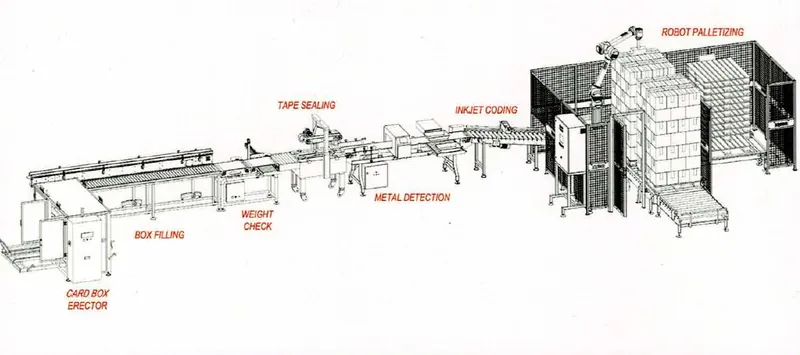
| Packing (dry) | Weighing, bagging or boxing, metal detection, palletizing | Dry, clean area, compressed air, packaging storage |
Utility checklist
Collect these before the layout review. The utility planning checklist goes into more detail.
- Steam: pressure available at each user, boiler capacity at peak, header routing, condensate return
- Water: supply flow and pressure, re-use and filtration, hot water for blanching, discharge limits
- Compressed air: pressure, and a dry, oil-free supply for valves and packaging
- Power: plant voltage (for example 480V/60Hz or 575V/60Hz), available capacity, panel locations
- Exhaust: steam peeler exhaust, blancher and dryer vapor, fryer exhaust
- Drainage: floor drains, slopes and solids handling in wet zones
Steam peeler steam, water, air and power figures per model are listed on the DORUK and Gentle pages.
Common bottlenecks to design out
- Freezer infeed stops: Usually a missing buffer upstream; a short accumulation conveyor absorbs short stops.
- Fryer starved or flooded: Uneven feed from cutting, or wet product at the fryer entrance; check dewatering and dryer capacity.
- Peeler waiting for product: Manual bin handling ahead of the peeler; an even-feeding hopper and a weighing hopper fix it.
- Maintenance access blocked: Pumps, filters and panels packed tight; reserve service lanes in the first layout.
- Water pooling under equipment: Floor slopes and drains planned after the equipment; set them with the layout.
New plant vs retrofit
Fry line layout FAQ
How much floor space does a fry line need?
It depends on throughput, product mix and the building. Bigtem sends a layout for your building after reviewing your design basis; we do not publish generic footprints.
What capacity can a Bigtem fry line have?
Fry lines are built from small to very large, sized to the plant. Share your target and we size every module to it.
Does Bigtem build the freezer?
No. The line uses an IQF freezer integrated from a partner manufacturer, selected to fit your line. Bigtem engineers the cooling, infeed and discharge around it.
Can you retrofit one section of an existing line?
Yes. Peelers, hydrocutters, blanchers and dryers are often replaced one at a time. The layout work then focuses on connections and access.
Which voltage do the machines use?
Bigtem builds to the voltage you specify, for example 480V/60Hz or 575V/60Hz.
Related: French fry line, machine by machine · Potato & French fry lines · Utility planning checklist
Request a fry line layout study
Share your target output, cut sizes, operating hours and site utilities. We size every module to the same throughput and send a layout and utilities outline.