
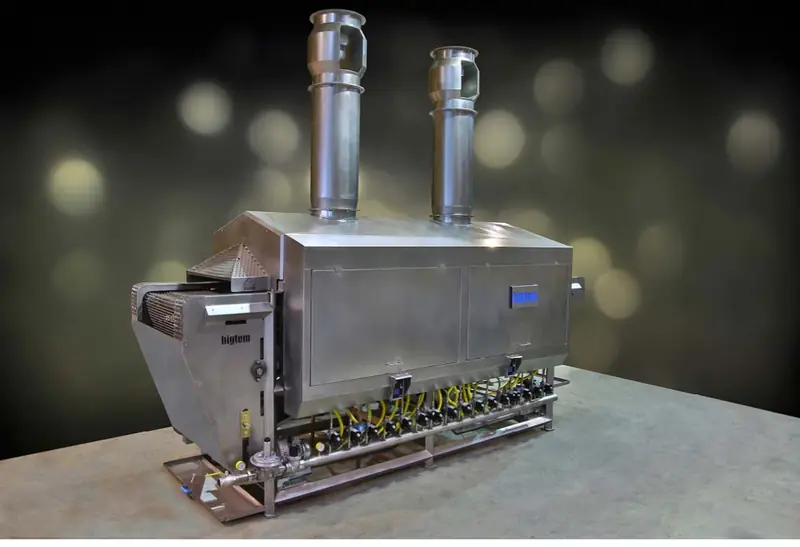
Heat radiation fire wrap roasting tunnel
Gas burners above and below a high-temperature stainless steel rod conveyor wrap the product in flame and radiant heat. For skin roasting of peppers and eggplant and flame peeling of onions.
Flame roasting tunnels, rod roasters and grill markers for peppers, eggplant, onions, zucchini and prepared foods — stand-alone or as a multi-tunnel roast-and-peel line. Roasters from about 2,200 to 44,000 lb/h (1 to 20 t/h), VFD-adjustable; gas scales from about 30 m³/h natural gas at 300 mbar per tunnel.
RFQ shortcut: Multi-tunnel lines · Utilities / gas scaling · Line stages · Multi-tunnel diagram · Corers · Parts & service · (770) 999-0587
Gas burners above and below a high-temperature stainless steel rod conveyor wrap the product in flame and radiant heat. For skin roasting of peppers and eggplant and flame peeling of onions.
Stainless steel studs on twin chain tracks carry the product through a firebrick-lined tunnel for intense, even charring.
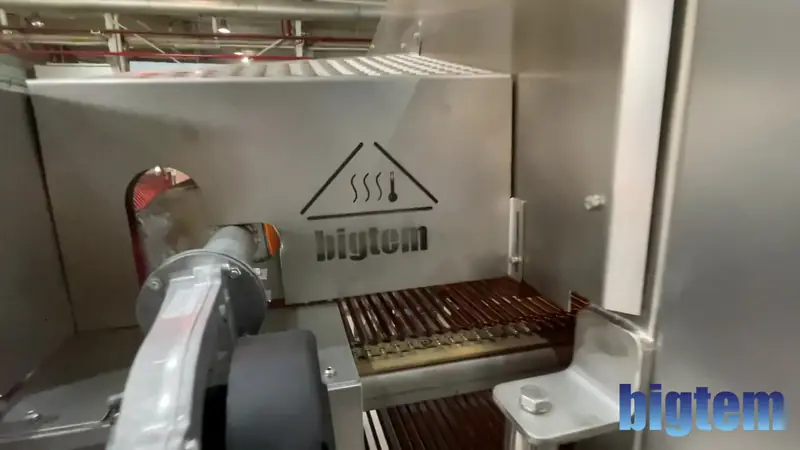
Sliced vegetables pass over a heated rod belt and under flame to get real grill marks and roasted aroma.
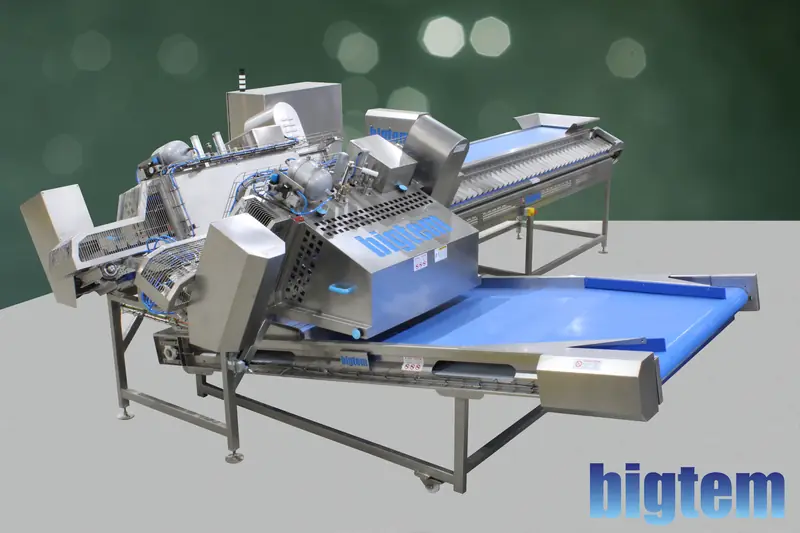
Removes stems and cores before roasting, so peppers roast and peel evenly.
Details →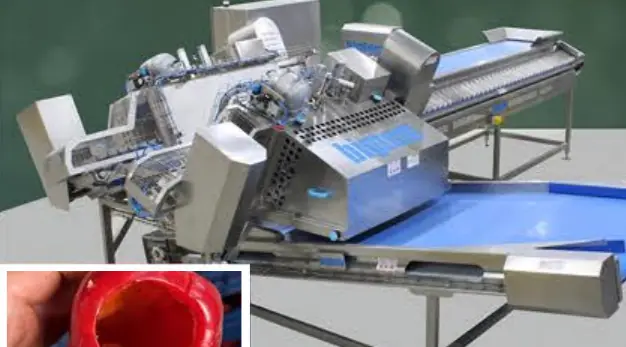
Multi-lane coring machine at the start of a roasting and peeling line.
| Burners | 10 top and 10 bottom burners with 20 gas/air mixers |
|---|---|
| Conveyor | Stainless steel rod conveyor, 1,000 mm wide, heat resistant to 700 °C |
| Insulation | 100 mm rock wool |
| Ignition | Automatic ignition, no flame means no gas |
| Construction | AISI 304 stainless steel except drive units and special alloy belt |
| Average gas use | About 30 m³/h natural gas at 300 mbar per tunnel |
| Throughput | About 2,200–44,000 lb/h (1–20 t/h) per roaster, VFD capacity control; exact rate confirmed from your product, cut and operating hours |
Source: Bigtem roasting tunnel data sheet. Configurations vary; ask for the data sheet for your product. Gas figure is approximate average use per tunnel; multi-tunnel lines scale roughly N × ~30 m³/h at 300 mbar.
Higher plant targets use more than one roasting tunnel in parallel, with shared feed, stem cut/core, water-brush peel and inspect. Gas scales approximately from the data-sheet average of about 30 m³/h natural gas at 300 mbar per tunnel. Bigtem pepper roasters run from about 2,200 to 44,000 lb/h (1 to 20 t/h); every roaster has a VFD, so capacity is adjustable. The exact rate is confirmed from your product, cut and operating hours.
| Tunnel count | Approx. natural gas | Throughput | Basis |
|---|---|---|---|
| 1 tunnel | About 30 m³/h natural gas at 300 mbar | About 2,200–44,000 lb/h (1–20 t/h) per roaster, VFD capacity control | Data sheet (1 × ~30) |
| 2 tunnels (parallel) | About 60 m³/h natural gas at 300 mbar | Each tunnel about 2,200–44,000 lb/h (1–20 t/h), VFD capacity control | N × data sheet |
| 3 tunnels (parallel) | About 90 m³/h natural gas at 300 mbar | Each tunnel about 2,200–44,000 lb/h (1–20 t/h), VFD capacity control | N × data sheet |
| 4+ tunnels (parallel) | N × about 30 m³/h natural gas at 300 mbar | Each tunnel about 2,200–44,000 lb/h (1–20 t/h), VFD capacity control | N × data sheet |
Approximate scaling only: N parallel tunnels ≈ N × ~30 m³/h at 300 mbar. Exact regulators, exhaust and plant pressure are confirmed with the layout on quote. Send product, hours and finished form to request a quote or call (770) 999-0587.
Utility figures come from the Bigtem heat-radiation tunnel data sheet. Plant-specific values are confirmed with the layout on quote.
| Utility | What we can say on the site | Source |
|---|---|---|
| Natural gas | About 30 m³/h at 300 mbar per tunnel (average). Multi-tunnel: N × ~30 m³/h. Plant pressure and regulators confirmed on quote. | Tunnel data sheet |
| Burners / ignition | 10 top + 10 bottom burners with 20 gas/air mixers; automatic ignition (no flame means no gas). | Tunnel data sheet |
| Conveyor | Stainless steel rod conveyor, 1,000 mm wide, heat resistant to 700 °C. | Tunnel data sheet |
| Electrical power | Drive and control power sized with the layout on quote (not a single published kW total for a multi-tunnel line). | Confirm on quote |
| Water | Used at water-brush peel and wash stages on a complete roast-and-peel line; not a published m³/h on the tunnel data sheet. | Bigtem line description |
| Throughput | About 2,200–44,000 lb/h (1–20 t/h) per roaster, VFD capacity control; exact rate confirmed from your product, cut and operating hours. | Bigtem roaster range |
A typical Bigtem pepper roasting line runs feed, automatic stem cut and core, heat-radiation roasting, water-brush peeling and inspection. Most North American lines finish with freezing or packing; jar filling is also possible.
| Stage | What happens | Link |
|---|---|---|
| 1. Feed | Even feed / oriented feeding of washed peppers or eggplant into the line. | Infeed |
| 2. Stem cut & core | Auto head trim and core/seed removal so product roasts and peels evenly. | Corers |
| 3. Roast | Heat-radiation fire wrap tunnel(s) and/or rod-type roaster char the skin for fire-roasted flavor and peel release. | Roasting |
| 4. Water-brush peel | Water brush / rotating brush drum removes loosened roasted skin with low labor. | Peeling |
| 5. Inspect | Dry inspection after peel; trim or reject as needed. | QC |
| 6. Freeze or pack | Transfer to freezing or packing. | Peppers · Parts |
Peppers & chiles applications · Floretters, corers & trimmers · Parts & service
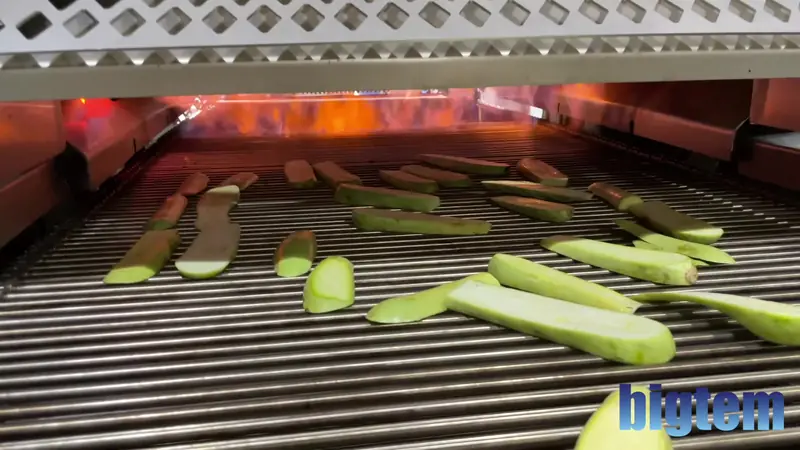
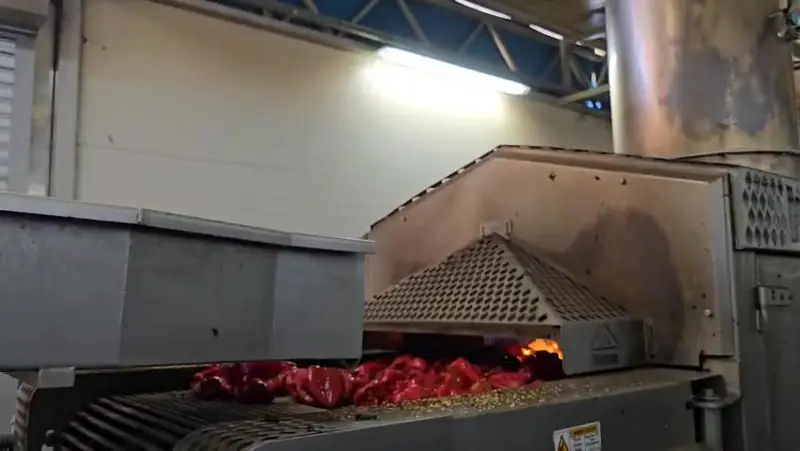
Roasting chars the whole surface, usually to loosen the skin for peeling and give a fire-roasted flavor. Grill marking puts distinct char lines on sliced products for appearance and aroma.
Peppers and chiles, eggplant, onions, zucchini, tomatoes and other vegetables; grill marking is used on zucchini, eggplant, peppers and prepared foods.
Natural gas, with burners designed to mix gas and air for a clean blue flame. Automatic ignition shuts off gas if the flame is lost. See utilities and multi-tunnel gas scaling.
Plant targets with more than one roasting tunnel run tunnels in parallel. Gas scales approximately from the data-sheet figure of about 30 m³/h natural gas at 300 mbar per tunnel (N × ~30 m³/h). Bigtem pepper roasters run from about 2,200 to 44,000 lb/h (1 to 20 t/h), all with a VFD so capacity is adjustable; the exact rate for your crop, cut and hours is confirmed with your quote. See multi-tunnel lines.
Bigtem pepper roasters run from about 2,200 to 44,000 lb/h (1 to 20 t/h). Every roaster has a VFD (variable frequency drive), so capacity is adjustable. Tell us the product (pepper type, eggplant, onion), whether whole or sliced, target hours and finished form (frozen, packed, jar), and we size tunnel count, belt speed and up/downstream modules from that data.
A stand-alone heat-radiation or rod tunnel (or grill marker) fits plants that already have coring, peel and pack. A complete pepper line adds feed, stem cut/core, roast, water-brush peel, inspect, then freeze or pack. See line stages and peppers & chiles.
The heat-radiation fire wrap tunnel data sheet specifies automatic ignition: if the flame is lost, gas is shut off (no flame means no gas). Burners mix gas and air for a clean blue flame. Plant gas pressure, regulators and exhaust are confirmed with the layout on quote.
Yes: feeding, stem cutting and coring, roasting (one or more tunnels), water-brush peeling, inspection and freezing or packing. See peppers & chiles, corers and parts & service.
Related: Peppers & chiles · Corers & floretters · Roasting technologies article · Frozen lines · Parts & service
Tell us the product, cut, hours and finished form. We recommend tunnel count, gas outline and line layout, with roasters from about 2,200 to 44,000 lb/h (1 to 20 t/h) each.