
How to Choose a Blancher: Water, Steam and Hydrostatic
Blanching is a short, controlled heat treatment. It inactivates enzymes before freezing, sets texture and color in fries, and removes surface sugars. The right blancher depends on the product, how gently it must be handled, and how precisely time and temperature must be held.
Bigtem USA engineering guide · updated October 2026
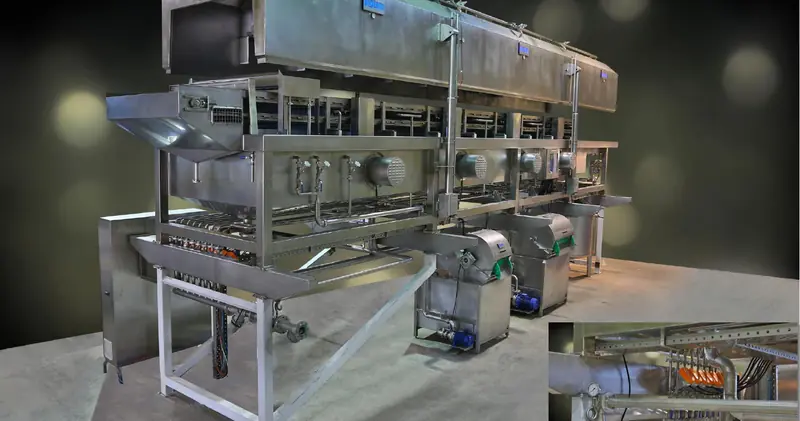
- Start from the purpose: enzymes, texture, color or sugar removal.
- Water blanching leaches more; steam blanching leaches less.
- Match the transport (belt, screw, drum, hydrostatic) to how gently the product must be handled.
Blancher types
| Type | How it works | Typical use |
|---|---|---|
| Dipping (immersion) blancher | Product carried through hot water by a belt or paddles | Fry strips and vegetables; simple and robust |
| Belt water blancher | Product on a belt under hot water sprays or immersion | Delicate cuts that should not tumble |
| Belt steam blancher | Product on a belt through a steam chamber | Sweet corn and vegetables where leaching must stay low |
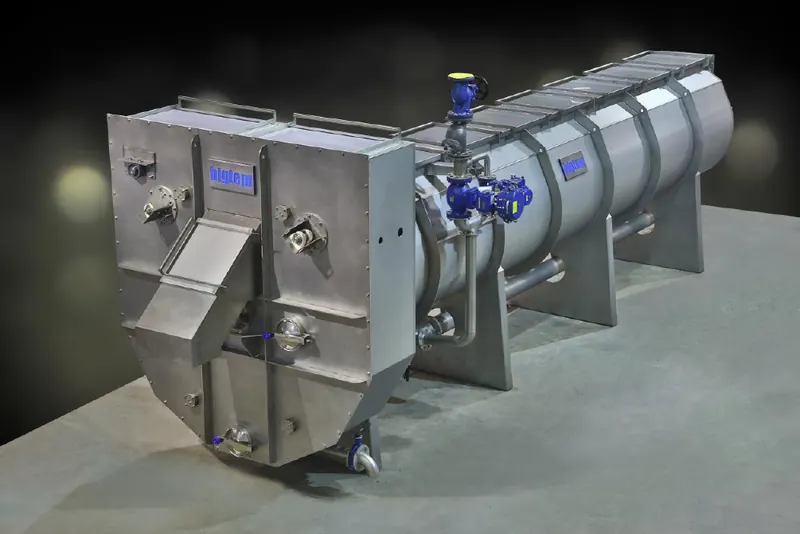
| Screw blancher | A rotating screw moves product through hot water | Fry strips and diced product; compact footprint |
| Drum blancher | A rotating drum with an internal helix | Small, robust pieces such as peas, beans and dice |
| Hydrostatic blancher | Steam and water zones with a water seal | Fruit and vegetables that need even heating, for example peaches |
Six steps to choose a blancher
- Define the purpose. Enzyme inactivation before freezing, texture and color setting for fries, sugar leaching, or pre-cooking. The purpose sets the time and temperature target.
- Describe the product. Piece size and shape, fragility, and whether pieces may tumble. Fragile product points to belt or hydrostatic designs.
- Choose water or steam. Water transfers heat evenly and leaches sugars, which fry lines often want. Steam leaches less, which matters for sweet corn and many vegetables.
- Set residence time control. How precisely must dwell time be held? Screw and belt designs give a defined time, and zone control lets a fry line run two blanching stages.
- Plan the next step. Blanched product goes to cooling, dewatering or drying. Size these together with the blancher.
- Check utilities and cleaning. Steam or hot water supply, water make-up and overflow, vapor exhaust, and cleaning access.
Blanching in French fry lines
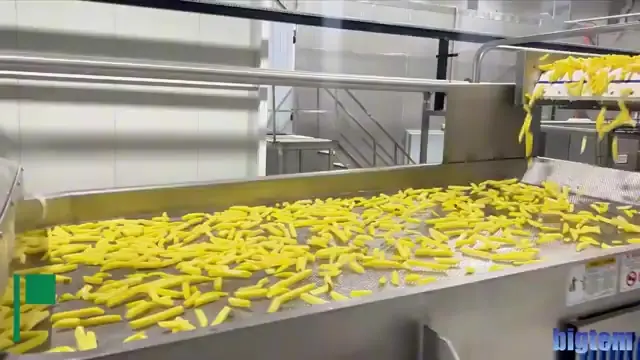
On a fry line, blanching sits between cutting and drying. Strips are blanched in two stages, then dewatered and dried on a belt dryer before the fryer. A screw blancher is common on smaller lines because of its compact footprint.
Blancher FAQ
Why blanch before freezing?
Blanching inactivates enzymes that would otherwise change color, flavor and texture during frozen storage.
Why do fry lines blanch in two stages?
A first stage evens out sugars and starts cooking; a second stage sets texture. Bigtem fry lines use two-stage blanching.
Water or steam for sweet corn?
Belt or steam blanching is used for sweet corn instead of water dipping, which reduces leaching.
Does Bigtem build all six blancher types?
Yes: dipping, belt water, belt steam, screw, drum and hydrostatic. See blanchers.
Related: Bigtem blanchers · Frozen fruit & vegetable lines · Fry line layout guide
Tell us your crop, capacity and timeline
A Bigtem USA engineer will review your project and follow up with a recommended configuration and a utilities outline.